
tongue-tie
Tongue-Tie vs Lip-Tie: What's the Difference?
Many Louisville families wonder about tongue-tie and lip-tie. Learn the key differences and how they can affect your child's breastfeeding, speech, and oral development.
By Gina Sabbak, RDH · · 3 min read
In this article
- 01.These two conditions are related but distinct, and understanding the difference can help you make informed decisions about your child's oral health and development
- 02.Let me start with tongue-tie, which is formally called ankyloglossia
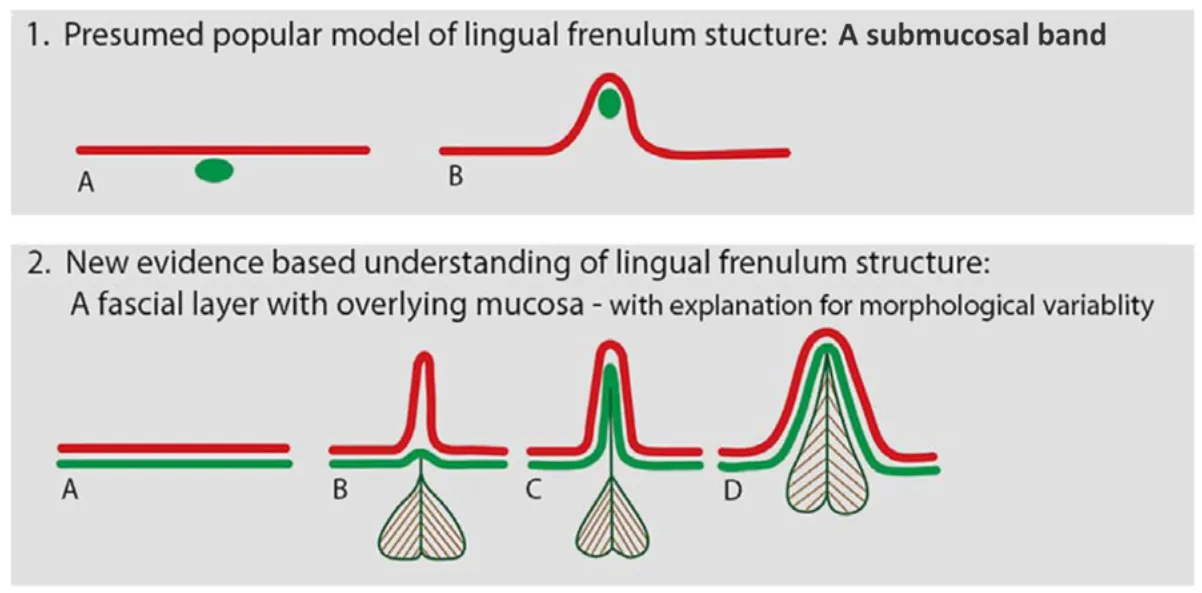
- 03.This condition occurs when the lingual frenulum, the small band of tissue that connects the underside of the tongue to the floor of the mouth, is unusually tight or short
- 04.When this happens, the movement of the tongue tip becomes restricted
As a myofunctional therapist with more than a decade of experience working with families throughout Louisville and the surrounding Kentucky communities, I often meet parents who are confused about the terms tongue-tie and lip-tie. These two conditions are related but distinct, and understanding the difference can help you make informed decisions about your child's oral health and development.
Let me start with tongue-tie, which is formally called ankyloglossia. This condition occurs when the lingual frenulum, the small band of tissue that connects the underside of the tongue to the floor of the mouth, is unusually tight or short. When this happens, the movement of the tongue tip becomes restricted. You might notice that your baby cannot lift the tongue to touch the roof of their mouth, extend the tongue beyond their lower gum line, or move the tongue smoothly from side to side. These limitations can make breastfeeding challenging because a proper latch requires the tongue to cup the nipple and create the vacuum needed for effective milk transfer.
Now, let us talk about lip-tie. This condition involves the labial frenulum, which is the tissue connecting the upper lip to the gum above the front teeth. When the labial frenulum is tight or restrictive, it prevents the upper lip from flanging outward as it should during breastfeeding or even during everyday activities like eating and speaking. A lip-tie can make it difficult for the lip to create a proper seal around the nipple, which may contribute to breastfeeding difficulties similar to those seen with tongue-tie.
Both tongue-tie and lip-tie can have effects that extend well beyond the newborn stage. As children grow, these restrictions may influence speech development. The tongue and lips work together to produce many sounds, and limited mobility can make it harder for a child to articulate certain letters and words clearly. I have worked with school-age children in Louisville whose speech challenges were ultimately linked to undiagnosed oral restrictions that had gone untreated for years.
Oral development is another significant concern. When the tongue cannot rest properly against the roof of the mouth, it may rest low and forward, which can contribute to a narrow palate, crowded teeth, and altered breathing patterns. Similarly, a restricted upper lip can affect how the teeth align and how the mouth closes during sleep. These patterns, if left unaddressed, may influence overall facial growth and even contribute to sleep-disordered breathing.
It is important to understand that not every case of tongue-tie or lip-tie requires intervention. Some individuals live with mild restrictions and experience no noticeable problems. However, when these conditions are causing functional issues such as breastfeeding difficulty, speech delays, or oral posture problems, seeking evaluation is a reasonable next step.
When it comes to treatment, different providers approach releases differently. Some dentists and oral surgeons perform frenectomy procedures using surgical scissors or lasers to release the frenulum. Others may use a more conservative approach, especially with very young infants. As a myofunctional therapist, my role typically focuses on the functional aspects before and after any release procedure. I work with children and adults to retrain the tongue and lip muscles, teach proper swallowing patterns, and address compensatory habits that may have developed over time. This therapy is essential because the release alone does not automatically teach the body how to use the newly freed tissues correctly.
If you are a parent in Louisville or anywhere throughout
Kentucky and you suspect that tongue-tie or lip-tie may be affecting your child's feeding, speech, or oral development, I encourage you to seek a comprehensive evaluation. Look for a provider who will assess not just the presence of a tight frenulum, but also how the oral muscles are functioning and how the restriction is impacting overall development.
What to do next: If you have questions or would like to schedule an evaluation for your child, please contact us at our Louisville office. We serve families throughout the Kentucky area and are happy to help you understand your options and create a personalized plan for your child's oral health journey.
Tags
- tongue-tie
- lip-tie
- myofunctional therapy
- ankyloglossia
- pediatric oral health

About the author
Gina Sabbak, RDH
Registered Dental Hygienist · Myofunctional Therapist
Gina is a Louisville-based registered dental hygienist and myofunctional therapist. She works with children and adults on tongue posture, nasal breathing, sleep-disordered breathing, and pre/post frenectomy support.
Reviewed by Gina Sabbak, RDH ·
Book an evaluationKeep reading
Related posts
September 29, 2026
Tongue-Tie and Breastfeeding: A Parent's Guide
Understanding tongue-tie symptoms in babies and mothers, and how myofunctional therapy supports better feeding outcomes in Louisville families.
Read more →September 30, 2026
What Does a Healthy Swallow Really Look Like?
Discover the signs of a proper swallow pattern and why it matters for your family's oral health in Louisville.
Read more →September 27, 2026
Why 'Just Braces' Doesn't Fix Crowded Teeth for Life
Discover why orthodontic treatment alone often fails to provide lasting results and how myofunctional therapy addresses the hidden causes of crowded teeth.
Read more →Have we worked with your family?
If anything here sounds familiar, Gina can help. Book a free consult.
Get in touch →