Tongue Posture
Tongue Posture 101: Where Should Your Tongue Rest?
Discover the correct tongue position for better breathing and oral health. A myofunctional therapist explains where your tongue should rest.
By Gina Sabbak, RDH · · 3 min read
In this article
- 01.Most of us go through daily life without ever considering the position of our tongue at rest
- 02.We focus on what we eat, how we breathe, and whether we're getting enough sleep, but rarely do we give a second thought to the simple act of having our tongue sit in our mouth
- 03.Yet this seemingly small detail can influence everything from how we breathe to the development of our facial structure
- 04.So where should your tongue actually rest
As a myofunctional therapist with over a decade of experience working with families throughout Louisville and the greater Kentucky region, I've noticed something fascinating about the human body that most people never think about: where your tongue rests inside your mouth matters more than you might realize.
Most of us go through daily life without ever considering the position of our tongue at rest. We focus on what we eat, how we breathe, and whether we're getting enough sleep, but rarely do we give a second thought to the simple act of having our tongue sit in our mouth. Yet this seemingly small detail can influence everything from how we breathe to the development of our facial structure.
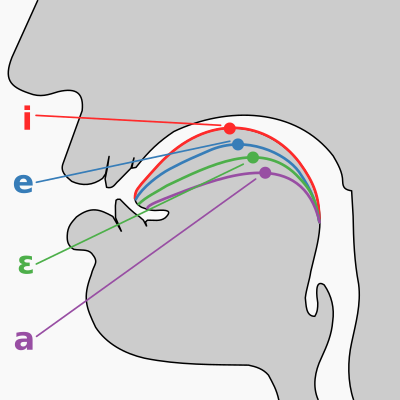
So where should your tongue actually rest? The ideal tongue position involves placing the tip of your tongue gently against the roof of your mouth, just behind your upper front teeth. You don't want to press hard or force it there; instead, think of it as a light suction where the entire length of your tongue rests against the palate. Your lips should be closed, your teeth should be slightly apart, and you should be breathing through your nose.
This position might sound unfamiliar because here's the honest truth: most people walking around today carry what we call low tongue posture. That means their tongue sits lower in their mouth, often pressing against the bottom teeth or resting on the floor of the mouth. This is incredibly common, and it's not necessarily anyone's fault. Many factors contribute to low tongue posture, including breathing patterns established in childhood, allergies that cause nasal congestion, and the way our bodies have adapted to modern life.
When you grow up breathing through your mouth due to chronic congestion or enlarged adenoids, your tongue naturally falls into a lower position because your airway needs that space. Over time, this becomes your default resting position. For Kentucky families, this is something I see regularly in my practice. Our region's seasonal allergies and sinus issues affect so many children and adults, and the connection between nasal breathing and tongue position is something more people need to understand.
The reason correct tongue posture matters is that your tongue is a powerful muscle. When it rests in the proper position against the roof of your mouth, it helps support the upper jaw and maintains the correct shape of your dental arch. When it rests low, over years it can contribute to narrow palates, crowded teeth, and even changes in facial development, particularly in growing children.
If you're wondering whether your tongue posture might be off, try this simple awareness exercise right now. Close your lips and notice where your tongue wants to sit. Does it naturally gravitate toward the roof of your mouth, or does it feel more comfortable resting down below? There's no judgment in this observation—awareness is simply the first step.
If you discover that your tongue does tend to rest low, know that this can be addressed through conscious retraining and, when helpful, through myofunctional therapy. The muscles of your tongue can be exercised and repositioned just like any other muscle in your body. It takes consistency and patience, but the results are well worth the effort.
What to do next: If you're curious about your own tongue posture or have questions about how this might be affecting your breathing or your child's development, I'd love to hear from you. Reaching out to learn more is the perfect first step, and I'm here to help guide you through what can feel like a whole new world of oral health awareness. Visit our contact page to schedule a conversation and discover what myofunctional therapy might do for you and your family.
Tags
- Tongue Posture
- Myofunctional Therapy
- Oral Health
- Breathing
- Louisville

About the author
Gina Sabbak, RDH
Registered Dental Hygienist · Myofunctional Therapist
Gina is a Louisville-based registered dental hygienist and myofunctional therapist. She works with children and adults on tongue posture, nasal breathing, sleep-disordered breathing, and pre/post frenectomy support.
Reviewed by Gina Sabbak, RDH ·
Book an evaluationKeep reading
Related posts
September 29, 2026
Tongue-Tie and Breastfeeding: A Parent's Guide
Understanding tongue-tie symptoms in babies and mothers, and how myofunctional therapy supports better feeding outcomes in Louisville families.
Read more →September 26, 2026
How Orthodontics and Myofunctional Therapy Work Together for Lasting Smiles
Discover how combining myofunctional therapy with orthodontic treatment creates stable, lasting results for Louisville families.
Read more →September 16, 2026
The 4 Habits of Highly Effective Oral Posture
After more than a decade working with families in Louisville and across Kentucky, I've seen something remarkable happen when people commit to proper oral posture.
Read more →Have we worked with your family?
If anything here sounds familiar, Gina can help. Book a free consult.
Get in touch →